
What Homeowners Need to Know About Termites
Termites are one of the most destructive pests homeowners can face, and Missouri is no exception. These tiny insects may be small, but the damage they can cause to homes and businesses is enormous. In fact, termites are responsible for billions of dollars in property damage across the United States each year. Unlike many other pests, termite damage often goes unnoticed until it becomes severe, making prevention and early detection extremely important for homeowners across the state.
Whether you live in a newer subdivision, an older home, or a rural property, termites can pose a serious risk. Understanding how termites behave, what attracts them, and how to spot the early warning signs can help you protect your home and avoid costly repairs.
Why Termites Are a Serious Problem in Missouri
Missouri’s climate creates an ideal environment for termite activity. Warm temperatures, seasonal rainfall, humid summers, and relatively mild winters allow termites to remain active for much of the year. These conditions provide the moisture and food sources termites need to survive and expand their colonies.
Termites are active across the entire state, from larger metro areas like Kansas City and St. Louis to growing communities such as Springfield, Nixa, and surrounding towns. No region in Missouri is immune to termite activity. Even homes that appear well maintained can become targets if the conditions are right.
The most common termite species found in Missouri is the Eastern Subterranean Termite. These termites live underground in large colonies that can contain hundreds of thousands of members. They build hidden tunnels through soil and inside walls to reach wood structures, allowing them to remain undetected while causing damage over time.
Because subterranean termites rely on moisture, they often thrive in areas with poor drainage, leaky plumbing, damp crawl spaces, or soil that stays wet for long periods. Homes with these conditions are especially vulnerable to infestation.
How Termites Damage Homes
Termites feed on cellulose, a natural material found in wood, paper, drywall, and many plant based products. Because homes are filled with wooden framing, flooring, support beams, and trim, termites often view houses as a reliable and continuous food source.
Unlike carpenter ants or other wood destroying insects, termites do not simply nest in wood. They actually consume it. Over time, they can hollow out structural components such as:
- Floor joists
- Wall studs
- Support beams
- Roof framing
- Wooden siding
- Decks and porches
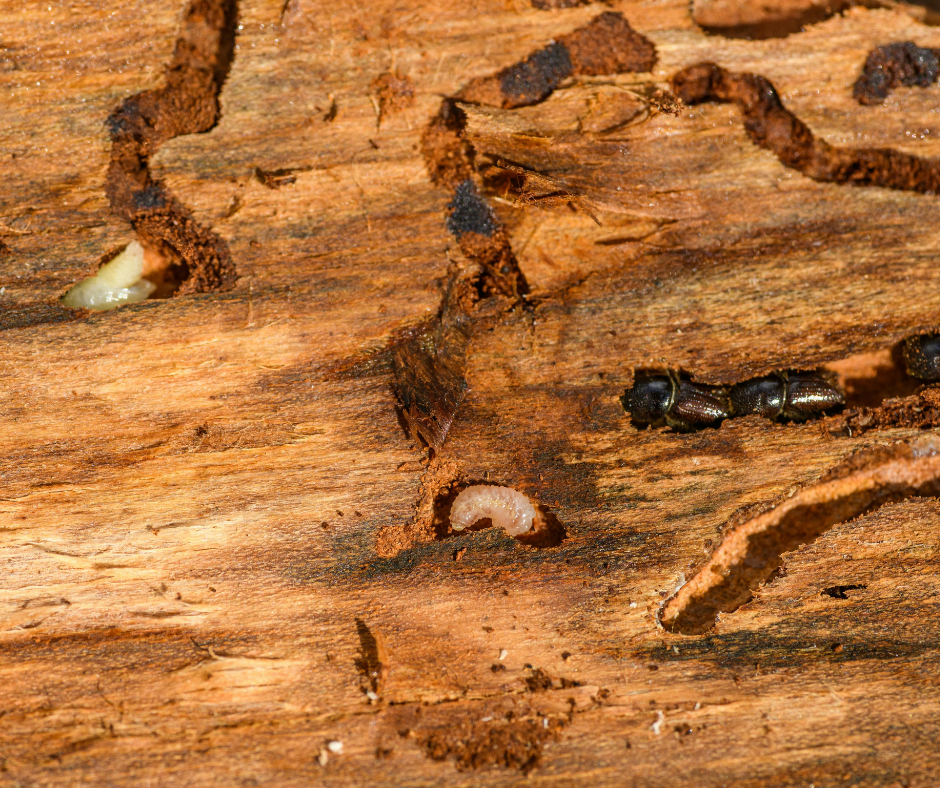
What makes termite damage particularly dangerous is how hidden it can be. Termites typically eat wood from the inside out, leaving a thin outer layer intact. This can make wood appear normal on the surface while the interior has been severely weakened.
In advanced infestations, termite damage can lead to:
- Sagging floors
- Buckling walls
- Sticking doors or windows
- Structural instability
- Expensive repairs
Because homeowner insurance policies often do not cover termite damage, prevention is far more affordable than repair.
Signs of a Termite Infestation
Recognizing the early signs of termite activity can help homeowners act quickly before damage becomes extensive. While termites are often difficult to spot, there are several warning signs that should never be ignored.
Common Signs of Termites
Mud Tubes
Subterranean termites build pencil sized mud tubes along foundation walls, crawl spaces, and basement surfaces. These tubes protect them from light and help retain moisture as they travel between the soil and your home.
Swarming Termites
Swarming termites are reproductive members of a colony that leave to start new colonies. Swarms typically occur in spring, often after a warm rain. Homeowners may see flying insects around windows, doors, or light fixtures.
Discarded Wings
After swarming, termites shed their wings. Small piles of clear or light colored wings near windowsills, doorways, or baseboards are a strong indicator of termite activity.
Hollow or Damaged Wood
Wood that sounds hollow when tapped or appears blistered, cracked, or soft may indicate internal termite damage.
Tight Fitting Doors and Windows
Termite damage can cause wood to warp or swell, making doors and windows difficult to open or close.
If you notice any of these signs, it is important to schedule a professional inspection as soon as possible.
Termite Swarmers vs Ants: How to Tell the Difference
One of the most common sources of confusion for homeowners is telling the difference between termite swarmers and flying ants. Both insects may appear around the same time of year, especially in spring, but they require very different treatment methods.
Here are a few key differences:
Termite Swarmers
- Straight antennae
- Equal length wings
- Thick, straight waist
- Light colored bodies
Flying Ants
- Bent antennae
- Front wings longer than back wings
- Narrow, pinched waist
- Darker colored bodies
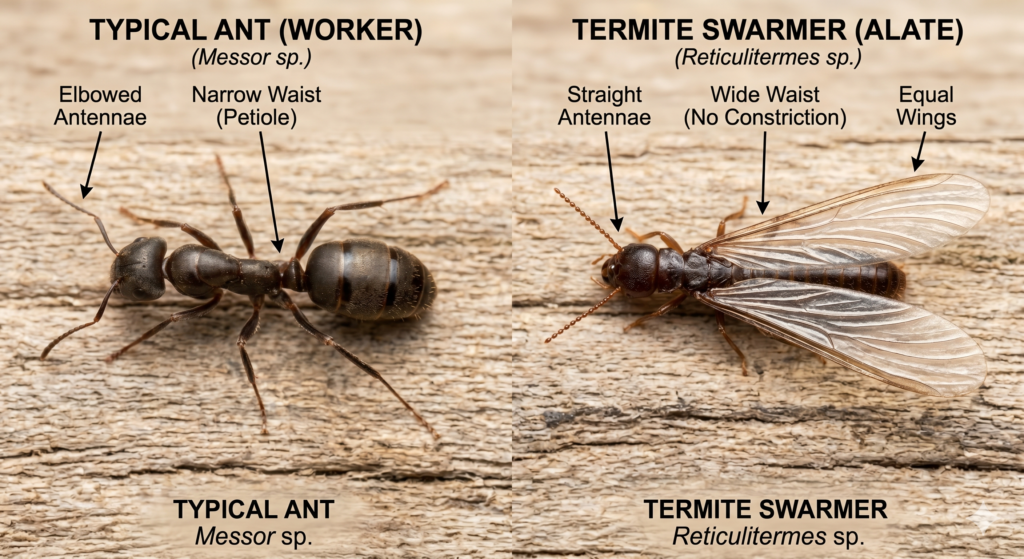
Mistaking termites for ants can delay treatment and allow damage to continue. When in doubt, a professional inspection can quickly identify the pest and determine the best course of action.
Why Professional Termite Inspections Are Important
Termites are extremely difficult to detect without proper training and equipment. They often remain hidden behind walls, under flooring, or beneath the soil. By the time visible damage appears, the infestation may have been active for months or even years.
A professional termite inspection typically includes:
- Examining the foundation and exterior of the home
- Inspecting crawl spaces and basements
- Checking attics and roof structures
- Looking for moisture issues and entry points
- Identifying conditions that attract termites
Routine inspections are especially important for:
- Homeowners buying or selling property
- Homes with previous termite activity
- Older homes
- Properties with crawl spaces
- Homes located in high moisture areas
Early detection can prevent thousands of dollars in structural repairs and provide peace of mind for homeowners.
Preventing Termites in Missouri Homes
While no home is completely immune to termites, there are several practical steps homeowners can take to reduce the risk of infestation. Prevention focuses on eliminating the moisture and access points that termites rely on to survive.
Practical Termite Prevention Tips
Reduce Moisture Around the Home
Fix leaking faucets, pipes, and air conditioning units. Ensure gutters and downspouts direct water away from the foundation.
Improve Drainage
Keep soil graded so water flows away from the house. Standing water near the foundation creates ideal conditions for termites.
Eliminate Wood to Soil Contact
Avoid direct contact between wooden structures and soil whenever possible. Use concrete or metal barriers when building decks, fences, or steps.
Store Firewood Properly
Keep firewood, lumber, and cardboard boxes at least several feet away from the home and elevated off the ground.
Seal Entry Points
Close gaps and cracks around foundations, utility lines, and exterior walls to limit access.
Schedule Regular Inspections
Annual termite inspections are one of the most effective ways to catch problems early.
These simple steps can significantly reduce the likelihood of a termite infestation and protect your property over the long term.
When Are Termites Most Active in Missouri?
Termites remain active year round, but activity often increases during certain seasons.
Spring is the most noticeable time for termite activity because this is when swarms typically occur. Warm temperatures and moisture create ideal conditions for colonies to expand and establish new nesting sites.
Summer brings continued feeding and colony growth, especially during humid weather.
Fall and Winter do not eliminate termites. Instead, colonies move deeper underground or remain active inside heated structures. This means termite damage can continue even when temperatures drop.
Because termites never truly go dormant, year round protection and monitoring are essential for Missouri homeowners.
Protecting Your Home from Termites
Your home is one of your most valuable investments, and termites can threaten its structural integrity if left untreated. The good news is that termite damage is largely preventable with the right knowledge and proactive care.
By understanding termite behavior, recognizing early warning signs, and taking preventive steps, homeowners can significantly reduce the risk of costly repairs. Regular inspections, moisture control, and prompt treatment are key components of long term protection.
If you suspect termite activity, notice warning signs, or simply want peace of mind, contacting a professional pest control company for an inspection is one of the smartest decisions you can make. Early action can save money, protect your property, and ensure your home remains safe for years to come.