
A Guide for Southwest Missouri Homeowners
If you’ve walked outside this summer and found your roses, flowers, or trees covered in shiny green and bronze beetles, you’ve probably met the Japanese beetle. These small but destructive pests can quickly turn a healthy, beautiful landscape into a collection of skeletonized leaves.
Japanese beetles are a common pest throughout Missouri, including Nixa, Springfield, Ozark, and communities across Southwest Missouri. They feed on more than 300 species of plants, including many popular trees, flowers, fruits, vegetables, and ornamental plants. The adults are easy to spot, but they are only one stage of the Japanese beetle life cycle. Their larvae live underground as white, C shaped grubs and feed on plant roots and turfgrass.
So, how do you get rid of Japanese beetles?
There are several things homeowners can do to reduce Japanese beetle activity, particularly when an infestation is small. However, Japanese beetles are highly mobile, and eliminating every beetle from your property isn’t realistic. If you’re dealing with significant or recurring Japanese beetle activity, professional pest control can help you manage the problem and protect your landscape.
At Chilton’s Environmental Termite and Pest, we help homeowners throughout Nixa and Southwest Missouri understand what’s causing their pest problems and develop practical solutions to keep unwanted pests under control.
What Are Japanese Beetles?
Japanese beetles are an invasive insect that’s easy to recognize. Adults are about half an inch long and have a metallic green body with bronze colored wing covers. They also have distinctive white tufts of hair along their abdomen.
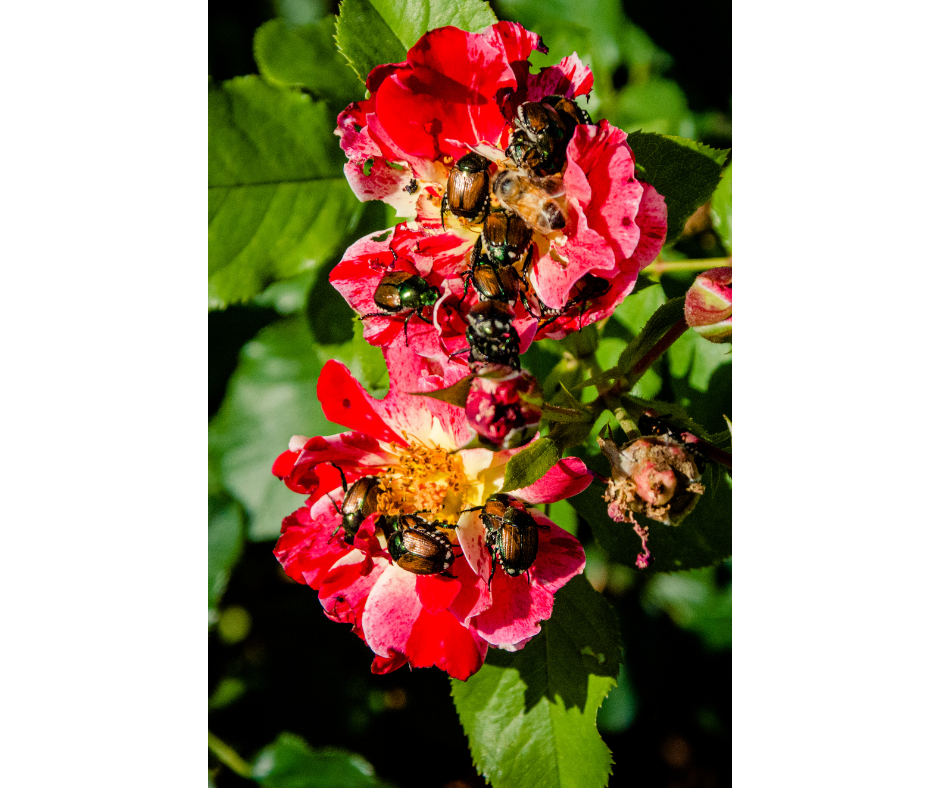
Adult Japanese beetles typically become active in Missouri around June. They feed primarily on plants in full sun and often gather in groups. Once they begin feeding on a plant, the damage and plant odors can attract additional beetles, which is why a small number of beetles can quickly turn into a much larger problem.
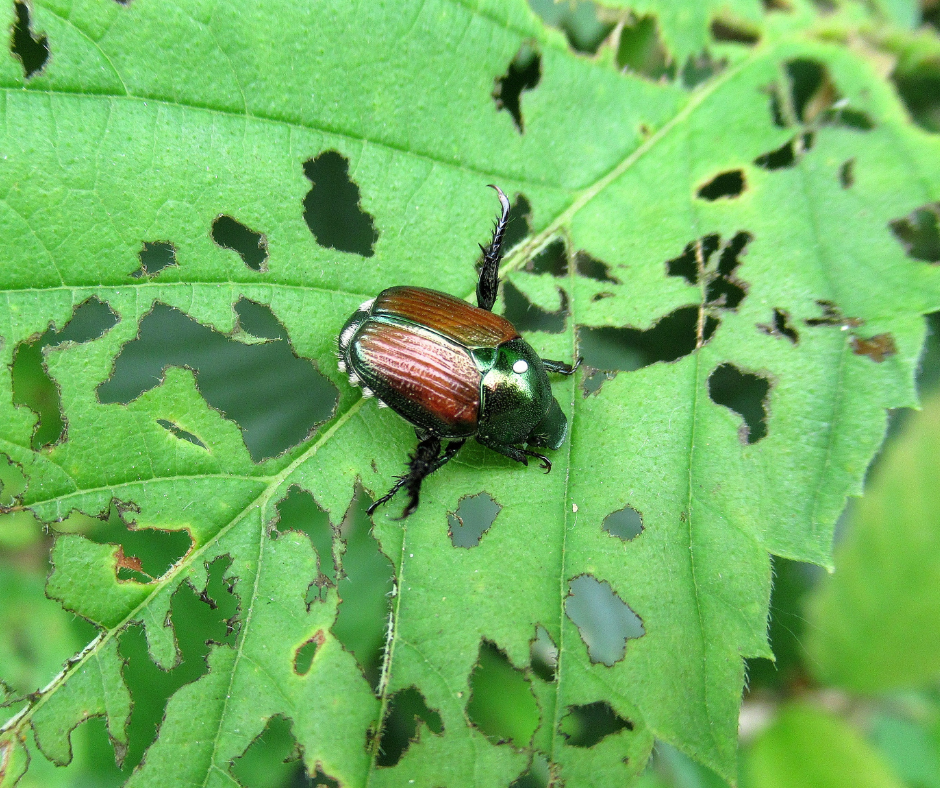
Japanese beetles can feed on hundreds of different plants, including roses, grapes, fruit trees, elm & birch trees, vegetable plants, and garden flowers just to name a few.
Because they aren’t particularly picky eaters, Japanese beetles can cause problems in gardens, landscaped yards, orchards, and other outdoor spaces.
What Does Japanese Beetle Damage Look Like?
One of the easiest ways to identify Japanese beetle activity is by looking at the leaves of your plants.
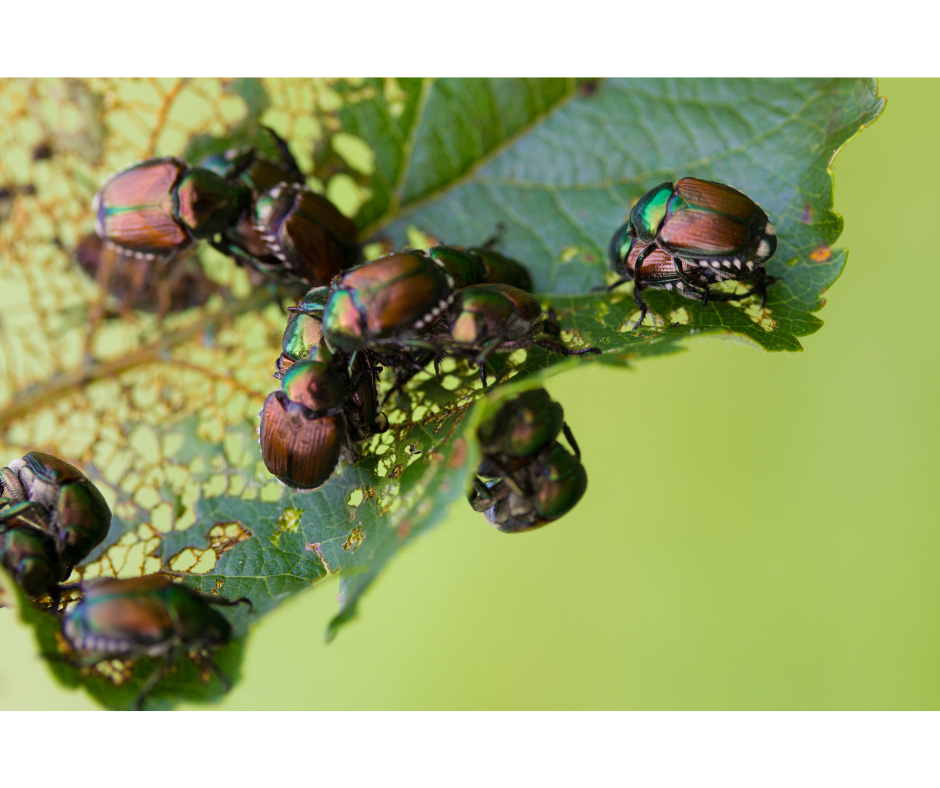
Japanese beetles feed on the soft tissue between the veins of leaves. As they continue feeding, the leaves take on a distinctive lacy or skeletonized appearance because the veins remain behind while the surrounding tissue disappears. Heavy feeding can result in partial or complete defoliation.
You may also notice beetles clustered together on the upper portions of plants, particularly plants located in full sunlight.
Healthy, established trees can generally tolerate a significant amount of Japanese beetle feeding, but heavy feeding still places stress on trees and plants. Providing appropriate water and maintaining good overall plant health can help reduce additional stress during periods of drought.
Why Are Japanese Beetles So Hard to Get Rid Of?
Here’s where Japanese beetle control gets a little more complicated.
The adult beetles you see on your plants are only one part of the problem. Japanese beetles spend most of their life cycle underground as grubs.
After mating, female Japanese beetles lay eggs in the soil. The eggs hatch, and the larvae develop into white, C shaped grubs that feed on plant roots, including grass roots. The grubs eventually pupate and emerge as adult beetles the following summer.
This means Japanese beetles can affect both your landscape and your lawn.
However, there’s an important misconception about Japanese beetle control that homeowners should understand.
Treating the grubs in your lawn does not necessarily mean you won’t have adult Japanese beetles next year.
Why? Because Japanese beetles are strong fliers. Missouri Department of Conservation notes that adult beetles can fly in from neighboring areas, including locations more than a mile away. That means the beetles covering your roses may not have developed in your own lawn at all.
This is one reason Japanese beetle control isn’t as simple as treating the soil and expecting the problem to disappear.
How to Get Rid of Japanese Beetles Naturally
If the infestation is small, there might be some simple things you can do yourself.
1. Hand Pick the Beetles
For smaller infestations, hand picking is one of the simplest ways to reduce the number of beetles feeding on your plants.
Japanese beetles are generally less active early in the morning, making them easier to remove. Gently shake the branches or stems over a bucket of soapy water, or pick the beetles off by hand and drop them into the water.
It may sound tedious, but removing beetles early can help prevent additional feeding damage and may reduce the attraction of even more beetles to the plant.
The key is consistency. If you’re dealing with a larger infestation, however, hand picking can quickly become impractical.
2. Use Protective Netting
Physical barriers can help protect individual plants from Japanese beetles.
Screens or netting can be placed over susceptible plants after pollination is complete. This can be particularly useful for smaller gardens or individual plants that are receiving heavy feeding pressure.
Of course, covering an entire landscape with netting isn’t exactly practical. If Japanese beetles are affecting trees, shrubs, flower beds, and multiple areas of your property, a more comprehensive pest management approach may be necessary.
Think Twice About Japanese Beetle Traps
Japanese beetle traps may seem like the perfect solution. They attract the beetles, capture them, and remove them from your yard.
The problem is that the attractant can bring Japanese beetles toward your property from surrounding areas.
Both the Missouri Department of Conservation and University of Missouri Extension caution against relying on Japanese beetle traps for management because traps can attract more beetles than they capture. This can actually increase feeding damage on plants near the trap.
If you decide to use a trap, Missouri Department of Conservation recommends placing it at least 100 feet away from plants you want to protect.
Will Treating Japanese Beetle Grubs Get Rid of Japanese Beetles?
Not necessarily.
This is one of the most important things to understand if you’re researching how to get rid of Japanese beetles.
Japanese beetle grubs can damage turfgrass by feeding on grass roots, so controlling a significant grub infestation may be appropriate for protecting your lawn. However, treating the grubs in your yard won’t necessarily prevent adult Japanese beetles from appearing the following summer.
As mentioned above, adult Japanese beetles can fly in from surrounding properties. Missouri Department of Conservation specifically notes that controlling Japanese beetle grubs in your lawn will not significantly reduce the number of adult beetles you see the following year.
In other words, if your main concern is the beetles covering your roses, simply treating your lawn for grubs may not solve the problem.
This is why identifying the pest and understanding its behavior is so important when deciding how to approach treatment.
When Should You Call a Pest Control Professional?
DIY methods can be helpful when you’re dealing with a handful of beetles. But if Japanese beetles are covering your plants or returning year after year, professional help may be the better option.
Consider contacting a pest control professional if:
- Japanese beetles are covering multiple plants
- Your flowers, shrubs, or trees are experiencing significant damage
- You’re finding Japanese beetles throughout your property
- You suspect your lawn may have a grub problem
- You’ve tried DIY treatments without getting the results you want
- Japanese beetles are a recurring summer problem
- You want a proactive pest management plan instead of reacting to every new infestation
At Chilton’s Environmental Termite and Pest, we don’t believe pest control should be a one size fits all solution.
Our team can inspect your property, identify the pest activity you’re dealing with, and recommend an appropriate treatment strategy based on your specific situation.
Don't Want to Fight Japanese Beetles Every Summer?
If Japanese beetles are a recurring problem around your home, it may be time to think beyond a single treatment.
Chilton’s offers residential pest control maintenance plans designed to provide ongoing protection throughout the year. Regular pest control service allows our team to monitor changing pest activity and address problems before they become bigger headaches.
A maintenance plan can be especially helpful for homeowners who don’t want to wait until pests become a noticeable problem before doing something about them.
Japanese beetles may be a summer pest, but they aren’t the only pests Southwest Missouri homeowners have to worry about. Ants, spiders, mosquitoes, fleas, ticks, termites, rodents, and other pests can become problems as the seasons change.
Ongoing pest control gives you a proactive way to protect your home instead of constantly reacting to whatever pest happens to show up next.
Get Help With Japanese Beetles in Nixa and Southwest Missouri
Japanese beetles can be frustrating, especially when you spend time and money creating a beautiful landscape only to find your plants covered in beetles.
While there are several things you can try yourself, Japanese beetles are highly mobile and cannot realistically be eliminated completely from a property. The right approach is to manage their activity, reduce damage, and protect the plants and outdoor spaces that matter most to you.
If you’re tired of battling Japanese beetles or other seasonal pests, Chilton’s Environmental Termite and Pest is here to help.
Serving Nixa, Springfield, Ozark, and communities throughout Southwest Missouri, Chilton’s provides professional pest control solutions and ongoing maintenance plans to help keep your home protected year round.
Ready to get your pest problem under control? Contact Chilton’s Environmental Termite and Pest today to schedule an inspection.