
The Hidden Lawn Damage Cycle (And How to Stop It)
If your lawn suddenly develops brown patches or mysterious tunnels, you might assume moles are the problem. While moles can certainly make a mess of your yard, they’re often just a symptom of a much bigger issue happening underground.
The real culprit is usually grubs.
Grubs feed on your lawn’s root system, weakening healthy grass and creating an ideal food source for moles. Understanding how grubs, June bugs, and moles are connected is the key to protecting your lawn before costly damage takes over.
It Starts Underground
Most homeowners never realize they have a grub problem until their lawn starts showing signs of damage.
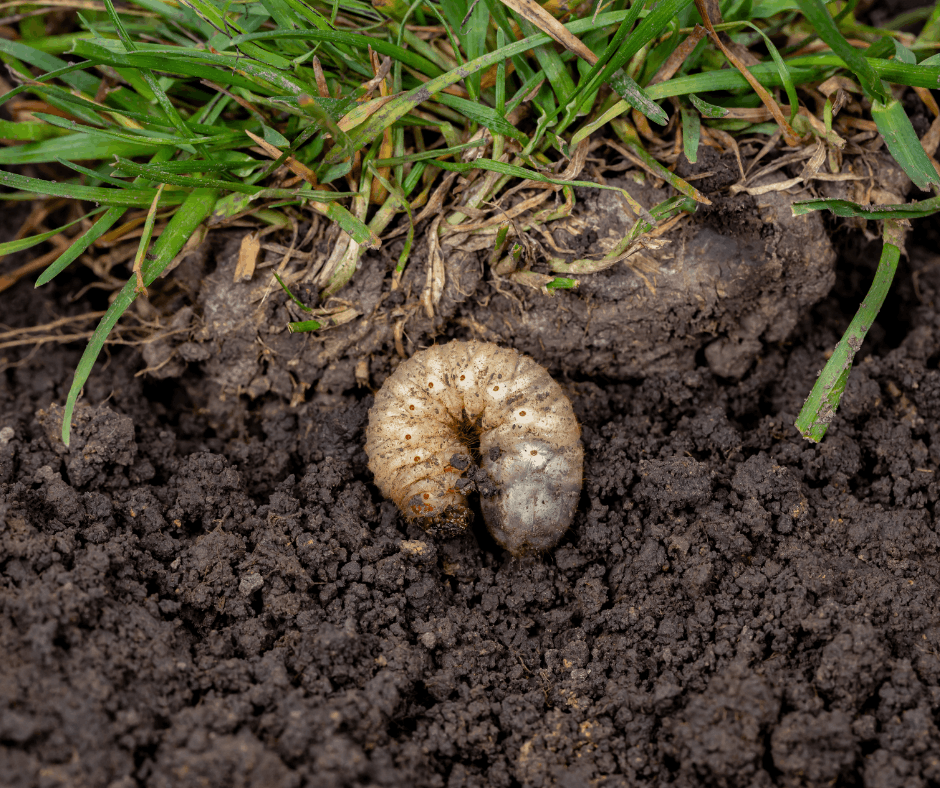
Grubs are the immature stage of the June bug. These white, C shaped larvae spend months beneath the soil feeding on the roots of your grass before eventually developing into adult June bugs.
While adult June bugs are mostly a nuisance around porch lights on warm summer evenings, the grubs are responsible for the real damage. As they feed, they weaken your lawn from below, often long before you notice anything is wrong.
How Grubs Damage Your Lawn
Healthy grass depends on a strong root system to absorb water and nutrients. As grubs feed on those roots, your lawn becomes stressed and vulnerable.
Common signs of a grub infestation include:
- Brown patches that don’t improve with watering
- Grass that pulls up easily like loose carpet
- Soft or spongy areas in the lawn
- Birds, raccoons, or skunks digging for food
Because the damage happens beneath the surface, many homeowners don’t realize they have grubs until large sections of grass begin to die.
Why Moles Suddenly Move In
Here’s something that surprises many homeowners.
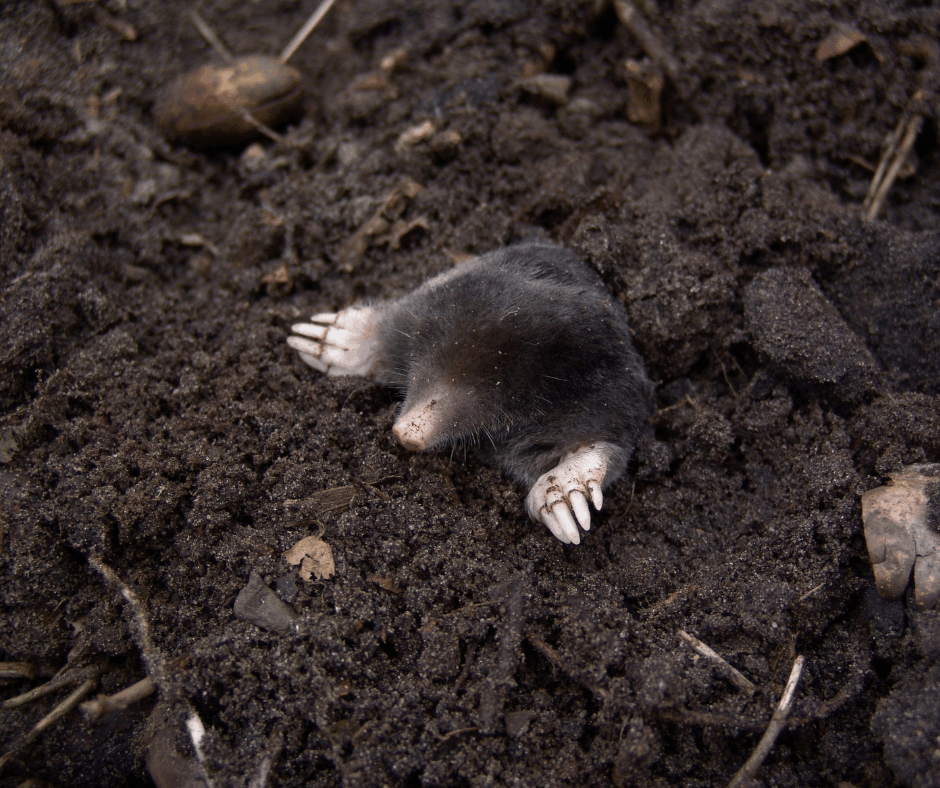
Moles aren’t eating your grass.
They’re digging through your yard in search of insects, and grubs are one of their favorite meals.
A lawn with an active grub population provides an easy food source, encouraging moles to tunnel beneath your yard. Those tunnels can damage healthy roots, create uneven ground, and leave your lawn looking worse than ever.
While moles also feed on earthworms and other insects, a yard full of grubs gives them a great reason to stick around.
Where Do Grubs Come From?
Grubs don’t appear on their own. They’re part of the June bug’s life cycle.
During late spring and early summer, adult June bugs lay their eggs just beneath the soil. A few weeks later, those eggs hatch into grubs, which spend months feeding underground before transforming into adult June bugs and repeating the cycle.
That’s why simply getting rid of the adult beetles doesn’t solve the problem. The damage is happening below the surface, where the grubs are feeding.
Breaking the Cycle
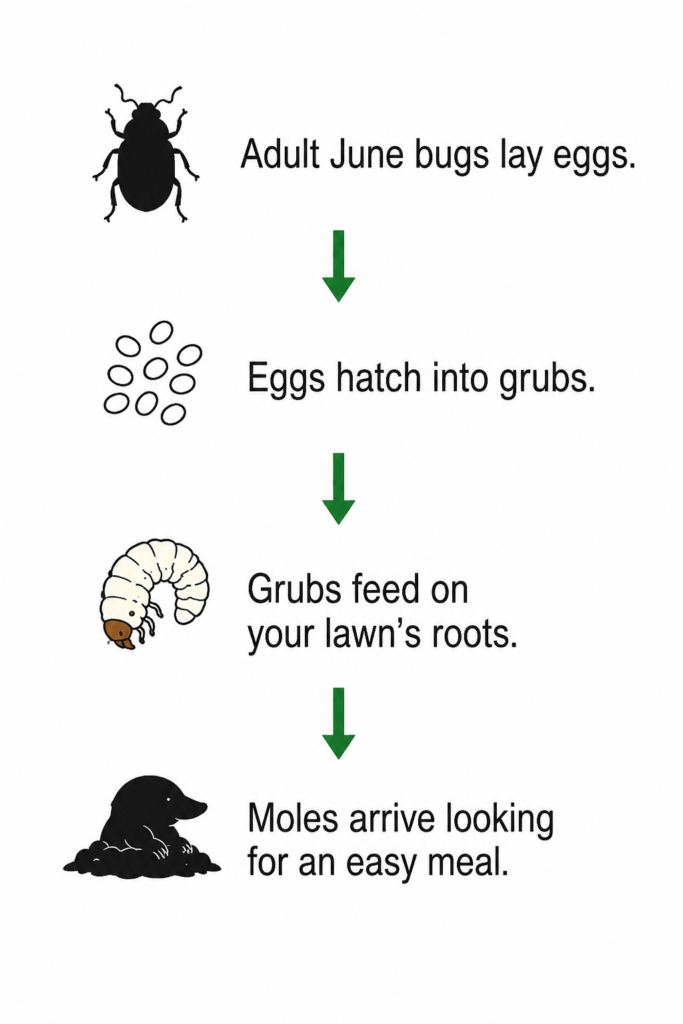
Think of it this way:
Adult June bugs lay eggs.
⬇️
Eggs hatch into grubs.
⬇️
Grubs feed on your lawn’s roots.
⬇️
Moles arrive looking for an easy meal.
If you only address the moles, you’re treating the symptom, not the cause. As long as grubs remain in the soil, your yard can continue attracting moles.
The best long term solution is reducing the grub population while also addressing any existing mole activity.
When Should You Treat for Grubs?
The best time to treat for grubs depends on whether you’re preventing an infestation or dealing with one that’s already active.
Preventative treatments help stop young grubs before they can damage your lawn’s root system, while curative treatments target existing infestations. Because timing is important, a professional inspection can determine the right treatment based on the season and the condition of your lawn.
How Professional Grub Treatments Help
Professional grub control targets the problem where it begins, beneath the soil.
Benefits of treatment include:
- Protecting your lawn’s root system
- Preventing extensive turf damage
- Reducing one of the primary food sources that attracts moles
- Helping your lawn stay healthier throughout the growing season
Although reducing grubs won’t guarantee every mole disappears because they also eat earthworms, it removes one of the biggest reasons they’re attracted to your yard.
Frequently Asked Questions
Do grubs always attract moles?
Not always, but grubs are one of a mole’s favorite food sources. The more grubs in your lawn, the more attractive your yard becomes to hungry moles.
Can I have grubs without seeing June bugs?
Yes. Adult June bugs are only active for a short period, but grubs live underground for much longer. It’s common to have grubs without noticing many adult beetles.
Will treating grubs repair my lawn?
Treating grubs stops further damage, but grass that’s already been severely affected may need time to recover or require reseeding.
How do I know if I have grubs?
A professional inspection is the most reliable way to confirm a grub infestation. You can also lift a section of damaged turf to look for white, C shaped larvae beneath the grass.
Protect Your Lawn Before the Damage Gets Worse

Grub damage often begins weeks or even months before you notice brown patches or fresh mole tunnels. By the time those warning signs appear, your lawn may already have significant damage below the surface.
Routine inspections and seasonal grub treatments help protect your lawn’s roots, reduce the food source that attracts moles, and keep your yard looking its best.
If you’ve noticed brown patches, loose turf, increased wildlife digging, or fresh mole tunnels around your home, now is the time to schedule an inspection.
At Chilton’s Environmental Termite & Pest Control, we help homeowners throughout Springfield, Nixa, Ozark, Republic, and the surrounding Ozarks identify grub activity, protect healthy lawns, and manage mole problems with customized treatment plans.
Call Chilton’s Environmental Termite & Pest Control today at 417.725.0306 to schedule your lawn inspection and protect your yard before the damage gets worse.