
Seasonal Habits, Winter Survival, and Spring Activity
Spiders are one of the most common pests Missouri homeowners encounter both indoors and outdoors throughout the year. While spiders often trigger fear or discomfort, most species found in Missouri are harmless and even beneficial. They help control populations of flies, mosquitoes, ants, and other insects that would otherwise become a bigger nuisance.
Understanding how spiders behave during different seasons can help homeowners better manage spider activity and prevent unwanted infestations. Missouri’s climate plays a major role in spider behavior, from hot and humid summers to cold and unpredictable winters. These changing conditions influence where spiders live, how they reproduce, and when they are most likely to enter homes.
From rural wooded areas to suburban neighborhoods and city homes, spiders are highly adaptable. That adaptability is why spider sightings often increase during certain times of the year, especially in late fall, winter, and early spring.
Missouri’s Climate and How It Affects Spider Activity
Because Missouri experiences all four seasons, often with extreme temperature swings, environmental shifts directly affect spider survival and movement.
During warmer months, spiders are typically more active outdoors where food sources are plentiful. As temperatures drop, spiders must find ways to survive the winter. Some species move indoors, some enter a dormant state, and others rely on egg sacs to carry their population into the next season.
This seasonal movement is one of the main reasons Missouri homeowners notice more spiders at certain times of the year.
Common Spiders Found in Missouri Homes and Yards
Missouri is home to a wide range of spider species. While many live outdoors and rarely cause issues, some are commonly found in and around homes.
Wolf Spiders
Wolf spiders are large, fast moving spiders that are often mistaken for more dangerous species. They do not build webs and instead hunt insects on the ground. While their size can be alarming, they are generally harmless and avoid human contact.
Jumping Spiders
Jumping spiders are small, active spiders known for their quick movements and excellent vision. They are often seen on windowsills, walls, and outdoor surfaces. These spiders are curious but not aggressive.
Orb Weaver Spiders
Wolf spiders are large, fast moving spiders that are often mistaken for more dangerous species. They do not build webs and instead hunt insects on the ground. While their size can be alarming, they are generally harmless and avoid human contact.
House Spiders
House spiders are one of the most common spiders found indoors year round. They tend to build webs in corners, basements, attics, and other undisturbed areas of the home.
Brown Recluse Spiders
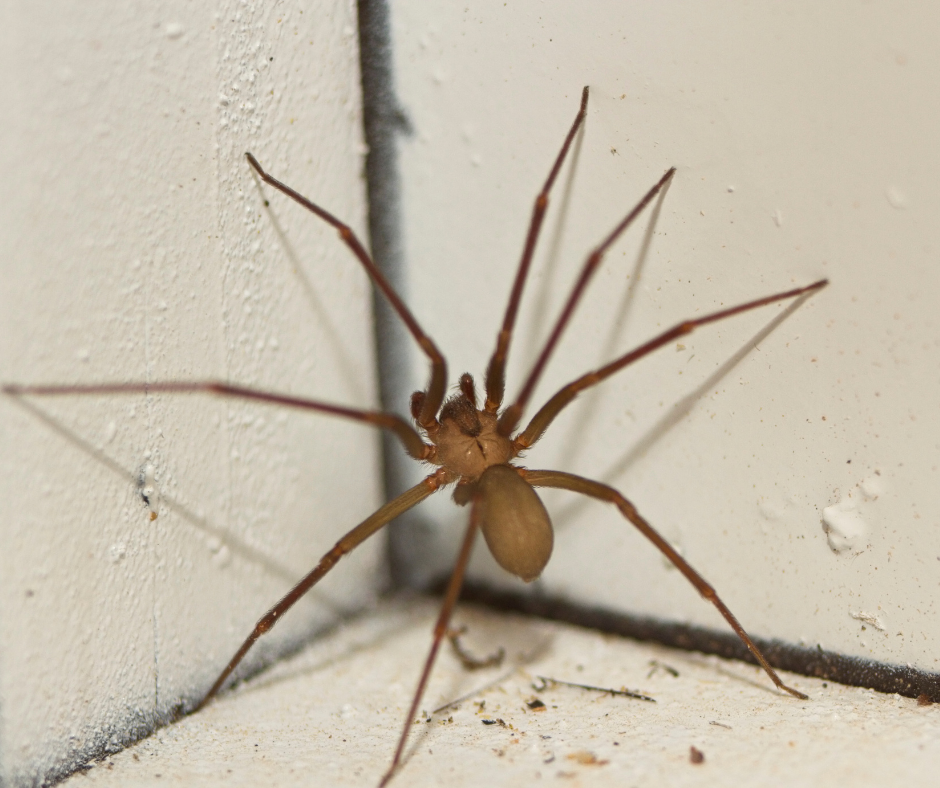
Brown recluse spiders are the most medically significant spider species in Missouri. They prefer dark, undisturbed areas such as closets, storage boxes, basements, and crawl spaces. While bites are rare, proper identification and prevention are especially important for Missouri homeowners.
Spider Habits During Winter in Missouri
As late fall transitions into winter, outdoor spider activity slows dramatically. Cold temperatures make it difficult for spiders to survive outside, especially during extended freezes.
Many spiders survive Missouri winters in one of three ways:
• Seeking shelter indoors
• Entering a dormant or low activity state
• Relying on egg sacs that hatch in spring
Indoor spider sightings often increase during winter as spiders search for warmth and protection. Homes provide stable temperatures, shelter from predators, and access to other insects that may also move indoors.
Common winter hiding spots include basements, crawl spaces, garages, attics, storage rooms, and behind appliances. Cluttered areas are especially attractive to spiders because they provide hiding places and undisturbed web building locations.
Spring Spider Activity in Missouri
As temperatures begin to rise in March and April, spider activity increases significantly. Spring marks the start of hatching season for many species. Egg sacs that survived the winter begin to hatch, and spiders become more active in search of food and mates.
During spring, homeowners may notice:
• Increased spider sightings indoors and outdoors
• New webs around doors, windows, porches, and landscaping
• More spiders near lights due to increased insect activity
Spring also brings a surge in insects, which provides an abundant food source for spiders. This increase in prey often leads to higher spider populations around homes.
Spiders In Homes
Spiders do not usually enter homes randomly. Several factors commonly attract spiders indoors. Weather changes, like sudden temperature drops, heavy rain, and extreme heat can push spiders indoors in search of shelter.
Spiders often follow insects into home as well. If a home has ants, flies, or other pests, spiders are likely to follow.
Missouri’s humid climate can create moisture issues in basements, crawl spaces, and bathrooms. Moist environments attract insects and spiders alike.
Cracks in foundations, gaps around doors and windows, torn screens, and utility openings make it easy for spiders to enter homes.
Spider Prevention Tips for Missouri Homeowners
Preventing spiders starts with making your home less inviting. A proactive approach can significantly reduce spider activity.
- Seal cracks and gaps around doors, windows, and foundations
- Reduce clutter in storage areas, basements, and garages
- Trim vegetation away from the home’s exterior
- Keep outdoor lighting away from entry points to reduce insects
- Control moisture with proper ventilation and dehumidifiers
- Address other pest issues that attract spiders
Regular cleaning and home maintenance play a major role in long term spider prevention.
When to Call a Pest Control Professional
While occasional spider sightings are normal, professional pest control may be needed in certain situations.
You should consider calling a pest control professional if:
- Spider sightings increase significantly
- Brown recluse spiders are suspected
- Spiders are found in living spaces or bedrooms
- Spider activity occurs alongside ants, roaches, or other pests
A pest control professional can properly identify spider species, locate hiding areas, and provide targeted treatments that are safe and effective. Professional services also help address underlying pest issues that attract spiders in the first place.
Spiders are a natural part of Missouri’s ecosystem and play an important role in controlling insect populations. However, understanding their seasonal habits can help homeowners reduce unwanted encounters and keep spider activity under control.
By learning how spiders survive winter, why activity increases in spring, and what attracts them indoors, Missouri homeowners can take proactive steps to protect their homes. With proper prevention and professional pest management when needed, spiders can be managed effectively throughout the year.